Archive Wing Heritage Wing Concepts Wing Museum Store Visit the Museum Store
01
Collection 01  ·  On View 2026

Southern Resilience

Wing
Heritage
Pillar
Honor the Ingredient
Star Ingredient
Sorghum Syrup
Provenance
West Africa · American South
On View Since
2026
Flavors of Survival

This collection honors the ancient grain that fed civilizations, survived the Middle Passage, and quietly sustained the American South for centuries. Sorghum is not a supporting ingredient. It is the story.

Reclaim the Exhibits →
The Curatorial Record
Sorghum: A Legacy of Resilience
"A crop that carried this many people through this much history deserves to be remembered."

Sorghum, an ancient grain in the grass family, has a long history as a symbol of perseverance, independence, and resilience. Originally from West Africa, sorghum fed civilizations for 5,000 years. It was brought to America by enslaved Africans who had everything taken from them — except their knowledge, their memory, and the seeds they carried.

Sorghum survived the Middle Passage and arrived in the American South not as cargo, but as an act of preservation. Enslaved people planted it in soil they didn't know, under conditions meant to break them, and sorghum grew anyway. And so did they.

In the 1850s and 1860s, abolitionists actively championed sorghum as the ethical alternative to slave-produced Caribbean cane sugar. While sugar required the industrial plantation system, sorghum could be grown by a single family on a small plot — independently, without complicity. It was the sweetener of self-determination.

For Freedmen and Freedwomen during Reconstruction, sorghum was a cornerstone of economic independence. For Appalachian and Scots-Irish families in the Southern highlands, it was the sweetener that sustained entire communities through hardships for generations. For Tejanos — families who farmed this land before Texas was "Texas" — sorghum was part of the same agricultural story: one of dispossession, hard labor, and survival.

One of the recurring themes in the history of sorghum is that the resilience of the plant — able to grow in harsh climates where other crops easily fail — is mirrored by the resilience of the people who cultivated it.

By the late 19th century, advances in sugar refining collapsed the price of refined sugar across America. Sorghum — the crop of the self-sufficient, the independent, the dispossessed — quietly disappeared from most American kitchens and most American memory. That is why The Cookie Museum brought it back.

Signature Exhibits
Exhibit 01  ·  Flagship
The Texas Crown
Heritage Wing  ·  Southern Resilience Collection

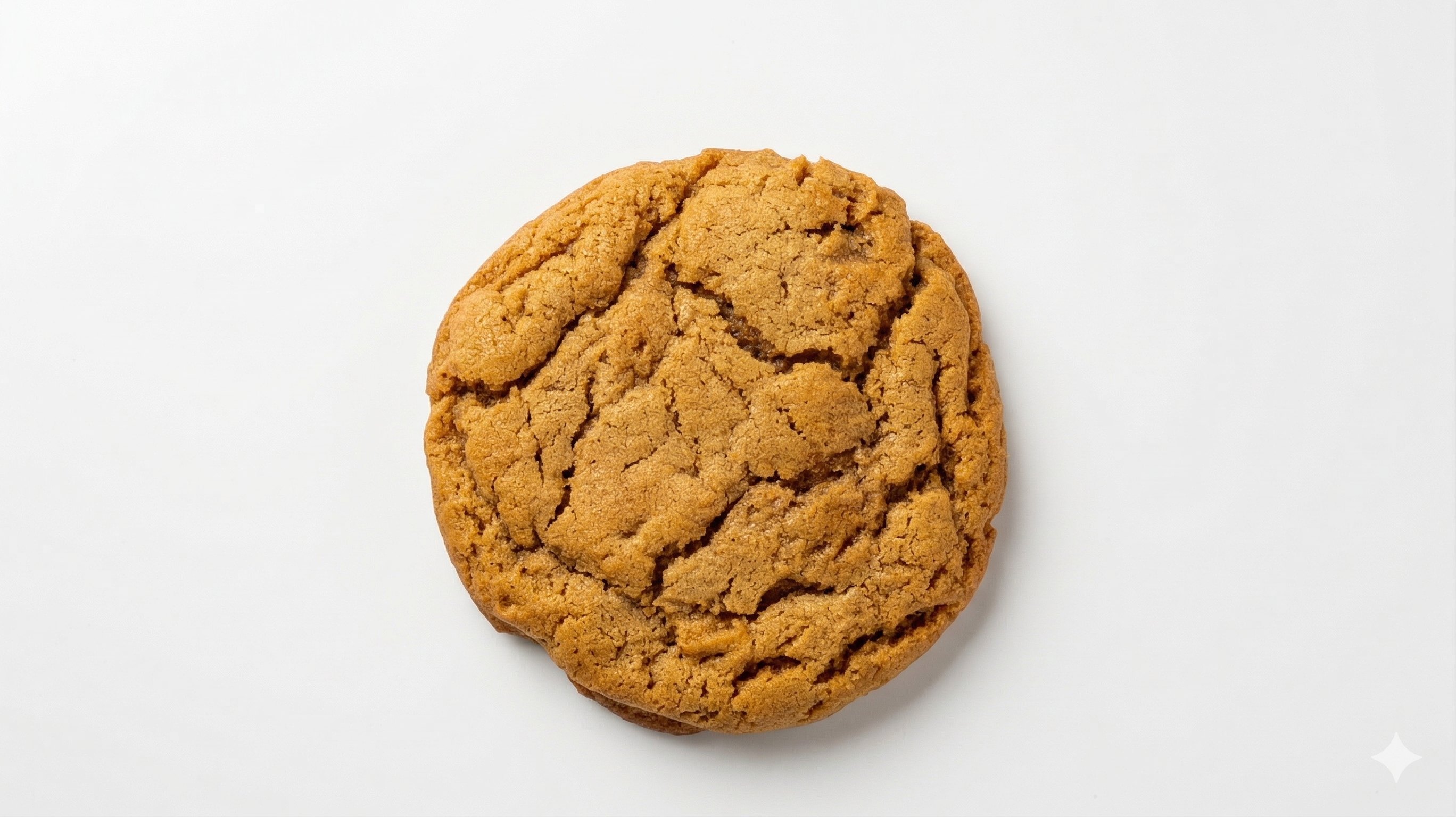
A browned butter cookie built on two Texas ingredients: roasted Texas pecans — the nut of the Texas State Tree — and artisanal sorghum syrup. The sorghum glaze ring and crushed pecan crown effect are not decoration. They are the story made visible.

Medium
Sorghum · Pecan
Dimensions
80g · 4"
Provenance
West Africa · Texas
Theme
Flavors of Survival
Notes
Contains pecans
Order Exhibit
The Texas Crown
Exhibit 02  ·  Companion
The Texas Jewel
Heritage Wing  ·  Southern Resilience Collection

The Crown's companion. Identical dough, same sorghum heritage story — without pecans. Jewel-like in finish, designed for sharing. Sold by the dozen for the visitors who want to pass the story around a table.

Medium
Sorghum · Brown Butter
Dimensions
12g · 2"
Provenance
West Africa · Texas
Theme
Flavors of Survival
Notes
Allergy-friendly
Order Exhibit
The Texas Jewel
The Curatorial Record
Sorghum, In Depth

Texas ranks second in the U.S. for sorghum production. What grows here, and why it grows here, is inseparable from the story of the Southern Resilience Collection.

1.8M
Acres in Texas
Texas ranks second in the nation for sorghum production — 728,000 hectares under cultivation.
50%+
Exported Globally
Over half of all U.S.-grown sorghum is exported — shipped through Texas seaports, airports, roads, and railways.
5,000
Years of History
An ancient grain originating in West Africa, sorghum has fed civilizations across six continents for millennia.
The Four Varieties
Forage Sorghum

Best used for grazing pasture, hay production, silage, and green chop. Typically grows 8 to 15 feet tall — the workhorse of livestock agriculture across the Texas plains.

Grain Sorghum

Variable in form — from tight-headed round panicles to open, droopy ones, short or tall. Primarily used for livestock feed and an expanding range of consumer food applications.

Biomass Sorghum

The largest variety, reaching 20 feet in a normal growing season. Grown primarily for bioenergy production — sorghum as a fuel source for the future.

Powerhouse Grain

This ancient grain has stood the test of time. As consumer demand for versatile, healthy, and sustainable grains rises, sorghum's popularity is seeing a resurgence. Sorghum is non-GMO and gluten-free, making it accessible to those with gluten sensitivities or intolerances.

Known as an environmentally friendly crop, sorghum is favored for its ability to convert sunlight into chemical energy and its efficient use of water — both of which matter in Texas. It thrives in conditions that defeat other crops. The resilience of the plant mirrors the resilience of the people who cultivated it.

Protein
10%
Complex Carbohydrates
~75%
Gluten
None
GMO
Non-GMO
Vitamin B6
Rich
Dietary Fiber
High
Sodium
Low
Potassium
High
Source  ·  texasagriculture.gov
Acquire the Collection
Take the Story Home.
Each exhibit ships packaged like a museum artifact.
Shop the Southern Resilience Collection